
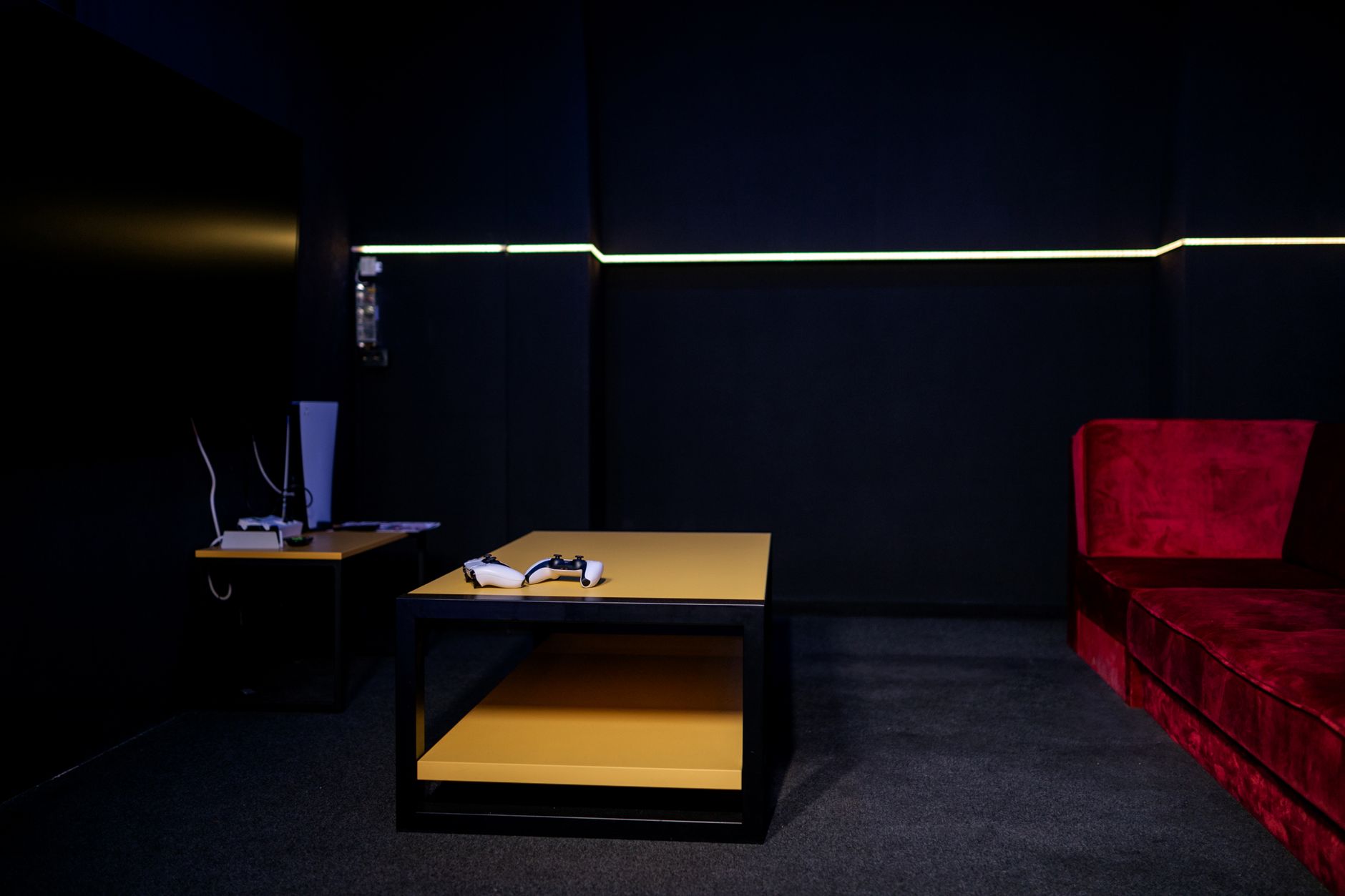
When designing a new home or planning a major renovation, few questions spark more debate than this: home cinema vs gaming room, which one earns its floor space? Both are genuinely compelling spaces when done well, but they serve different people, different households, and different ideas of what a great evening at home looks like. Understanding what each demands, and what each delivers, makes the choice much clearer.
What a home cinema actually gives you
A dedicated home cinema is built around one central experience: immersive, communal viewing. The room is optimised for a large screen (or projector and screen combination), layered surround sound, and seating that puts everyone in the best possible position to watch. When it's designed well, it transforms movies, sport, and streaming into something qualitatively different from watching on a standard living room television.
The payoff is real. Sound isolation, controlled lighting, and acoustic treatment create an atmosphere that a general-purpose room simply cannot replicate. For families who host regularly, or households where movie nights are a ritual, a purpose-built cinema room becomes one of the most used spaces in the home. It also adds a striking feature that appeals strongly to future buyers if you ever decide to sell. Our guide to home theatre room design covers the core decisions in depth, from screen size and projector choice through to acoustic panels and seating tiers.
The trade-off is that a cinema room is a single-purpose space. Outside of watching content, it doesn't do much else. That's fine in a larger home where square metres aren't scarce, but it's a real consideration in tighter floor plans.
What a gaming room actually gives you
A dedicated gaming room is built around performance and personal immersion. The focus is on fast, high-resolution displays, ergonomic seating, low-latency audio, and a setup that lets you play for hours without fatigue. A well-planned gaming room also tends to double as a productive workspace, since the hardware and layout overlap significantly with a high-spec home office.
Gaming rooms are inherently personal spaces. They're designed around one or two people rather than a group, which makes them easier and cheaper to optimise. You're not trying to create the perfect sightline for eight seats. You're getting one chair, one desk, and one setup absolutely right. For practical layout inspiration, our best gaming room setup ideas article walks through everything from monitor positioning and cable management to lighting and acoustic dampening.
The flexibility of a gaming room is also worth noting. With the right furniture choices, the same room can shift between gaming, remote work, video calls, and casual streaming. That versatility matters in homes where every room needs to carry its weight.
Key factors to weigh before you decide
Who uses the space, and how often?
A cinema room serves a household best when multiple people regularly want to watch together. If you're frequently hosting friends for sport nights, movie marathons, or streaming premieres, the communal design of a cinema pays dividends constantly. If most of your entertainment is solo or involves only one other person, a gaming room's focused setup will see far more daily use.
How much space do you actually have?
A proper home cinema needs enough depth to establish a viewing distance that makes the screen feel cinematic rather than just big. As a rough guide, you want at least 4 to 5 metres of room depth for a meaningful projection setup. A gaming room can work comfortably in a smaller footprint, since the screen is closer and the seating arrangement is simpler. If you're working with a room under 15 square metres, a gaming room is likely to feel right-sized where a cinema room would feel cramped.
What's your realistic budget?
Both spaces require investment, but the cost profile differs. A home cinema demands significant spending on acoustic treatment, a quality projector or large-format display, a multi-channel audio system, and seating. Entry-level setups can come in around $8,000 to $12,000, but a genuinely impressive cinema room can run well above $30,000 when construction, fitout, and equipment are all considered.
A gaming room can be put together thoughtfully for considerably less, particularly if you already own some of the hardware. A high-spec gaming setup with quality monitors, a purpose-built desk, ergonomic chair, and good audio might land anywhere from $3,000 to $10,000, with room to upgrade components gradually over time.
Will this space add lasting value?
Both rooms add appeal when a home goes to market, though a cinema room tends to generate more visible excitement from prospective buyers because it's the more unusual offering. That said, a poorly executed cinema room (one that's dark, cramped, or acoustically dead) can read as wasted space. A well-designed gaming room that doubles as a study often reads as a practical bonus to a wider range of buyers. Think carefully about how the room will be perceived if your circumstances change.
Can you have both?
In some homes, a hybrid approach works better than either option alone. A large-screen display with surround sound can serve cinema-style viewing while a dedicated desk area handles gaming and work. The compromise is that neither function is optimised to the same degree as a dedicated room, but for households where space is limited, the hybrid approach delivers most of the value at a fraction of the footprint.
If your home is still in the design stage, this is worth raising with your builder early. Routing the right conduit, planning power points in the right locations, and choosing wall and ceiling finishes that support acoustics are all far easier to do during construction than after. A broader look at home automation for beginners is also worth reading at this stage, since both cinema and gaming rooms benefit considerably from integrated lighting control, smart audio, and automated blinds.
Making the final call
There's no universally correct answer to the home cinema vs gaming room question. The right choice is the one that fits how your household actually spends its time. If evenings in your home revolve around shared viewing and you entertain regularly, a cinema room will return its investment in enjoyment many times over. If you work from home, game regularly, or want a space that adapts to multiple uses, a gaming room is the smarter allocation of floor space.
Either way, the decisions you make at the design and planning stage determine how well the finished room performs. Build it right from the start, and you'll have a space that earns its place every single day.